IC.
GITHUBGH LINKEDININ
SYSTEM 005 · TALK ENGINE · IN REAL USE

Presentation Studio.

An interview goes in; a projector-ready deck with live QR audience polls comes out. 'No human writes code in this repo' is written into the agent contract - and kept.

INTERNAL SYSTEM · REAL INTERFACE, PROTECTED DATA · WALKTHROUGH AVAILABLE ON REQUEST
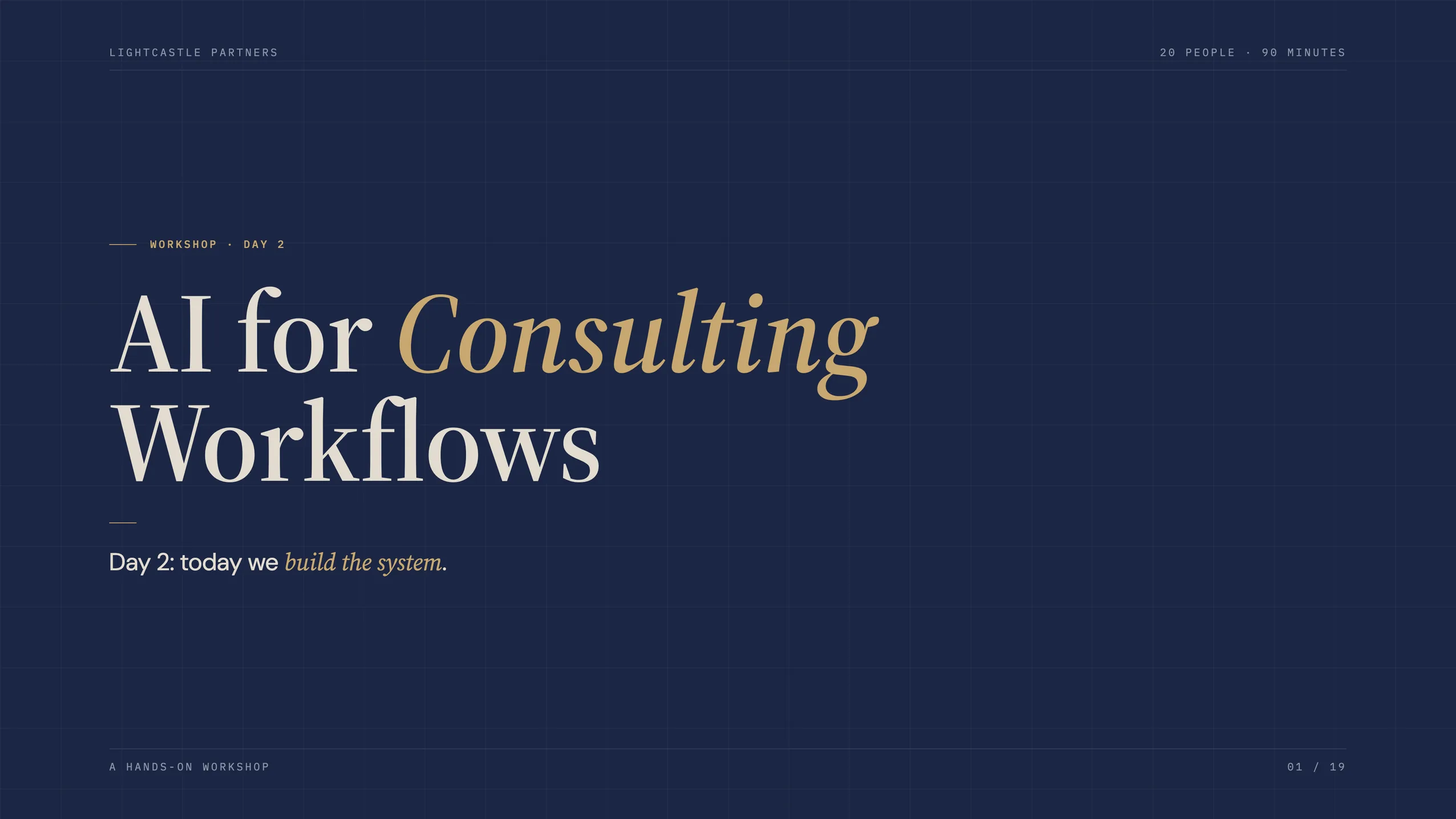
the lightcastle deck · presented live
The real LightCastle deck title slide, rendered by the engine in the Signal design system
01 · THE PROBLEMWHAT WAS BROKEN

Every talk was a fresh hand-built app. Deck two nearly destroyed deck one. A dropped tunnel killed a live audience poll mid-session. Decks are software - they needed an engine.
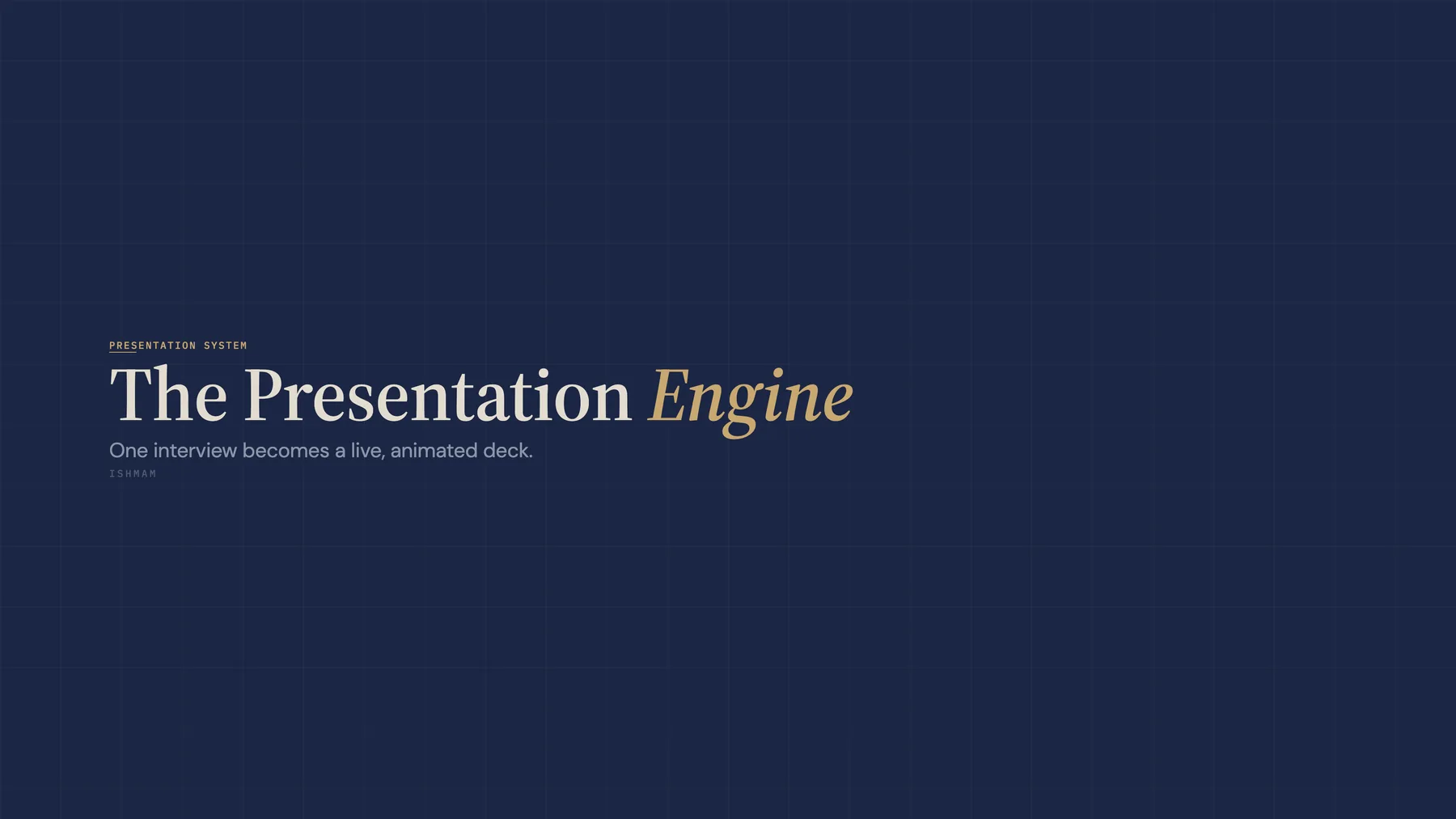
02 · THE SYSTEMWHAT SHIPPED · WHO USES IT
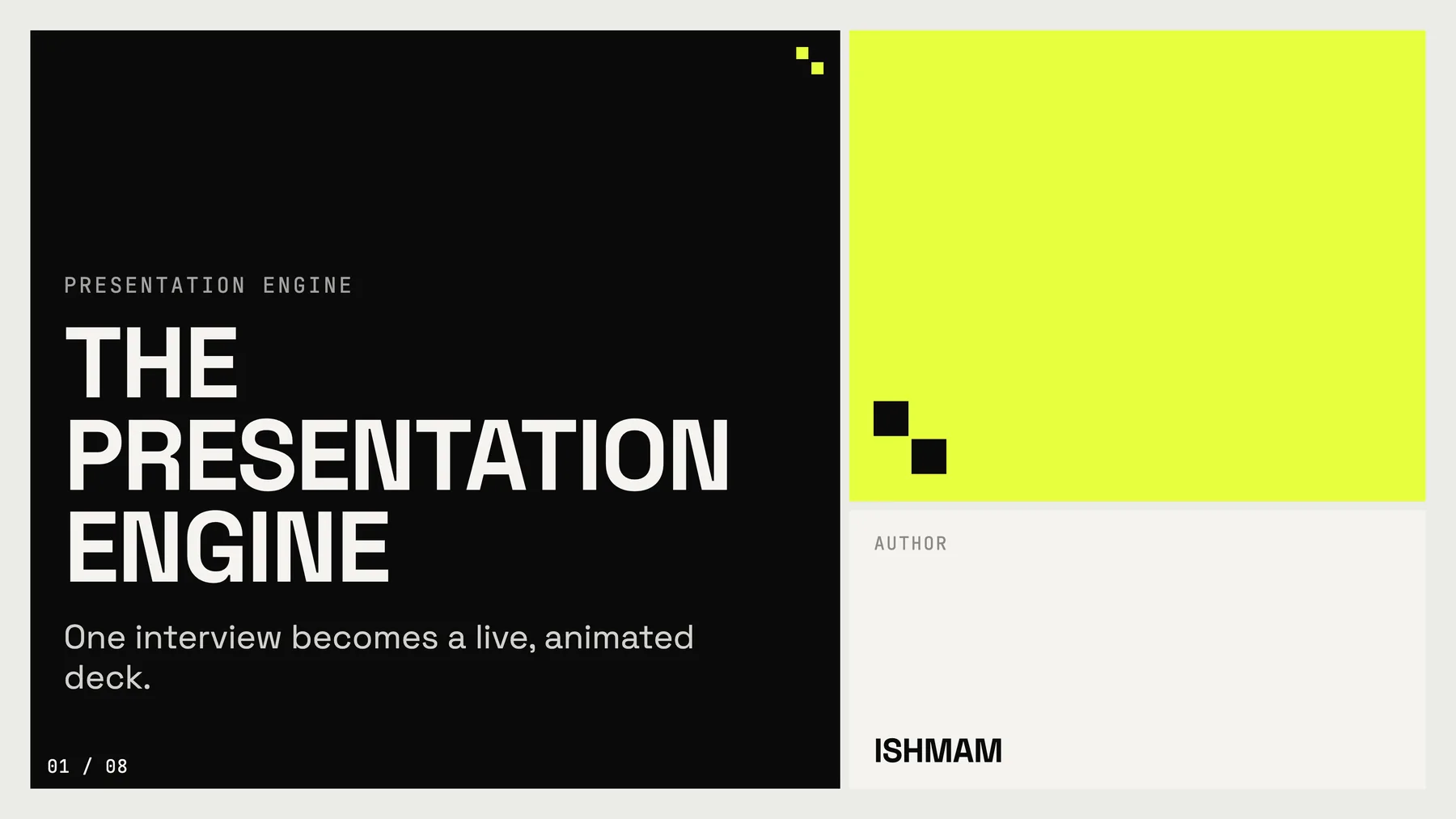
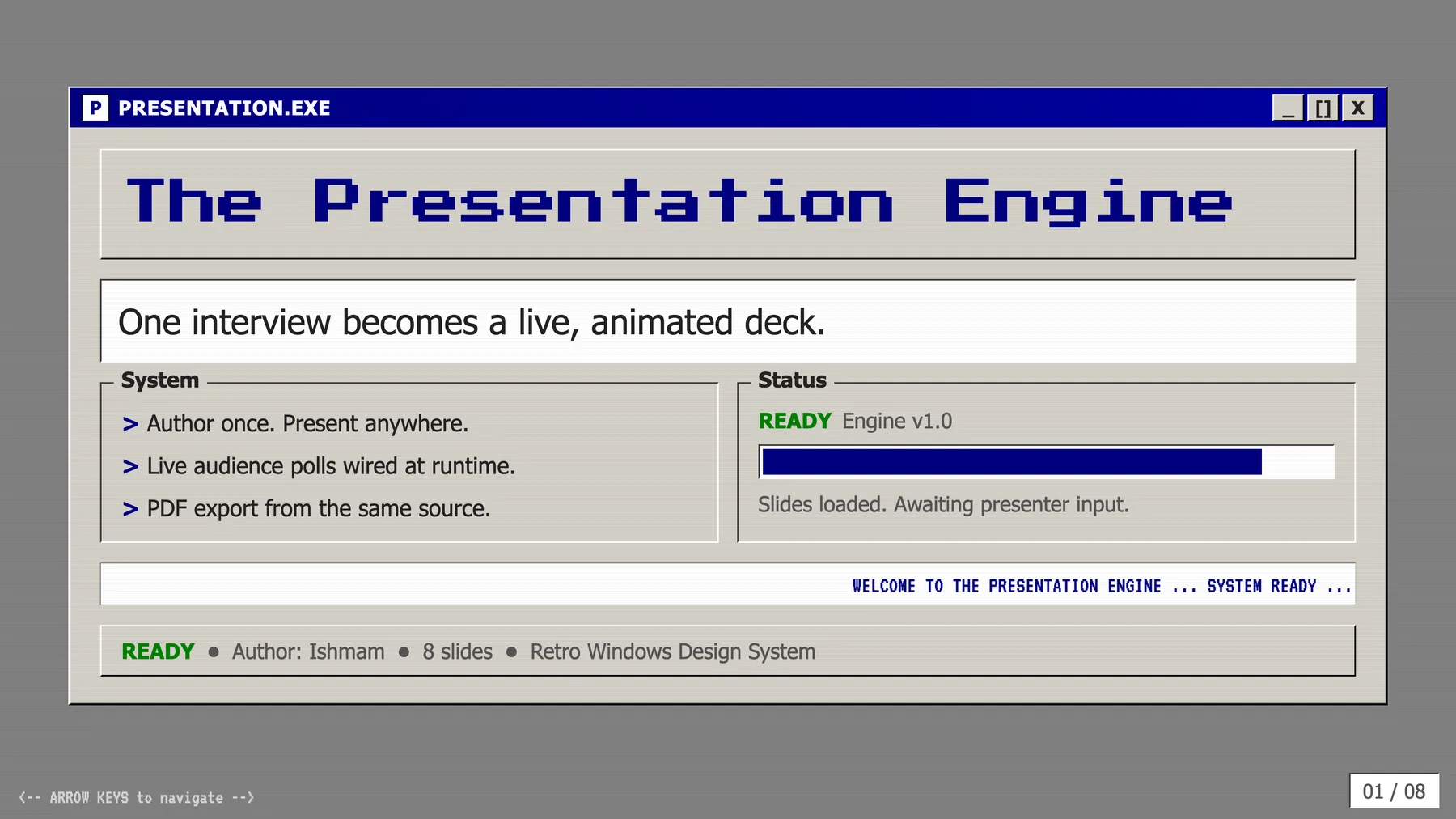
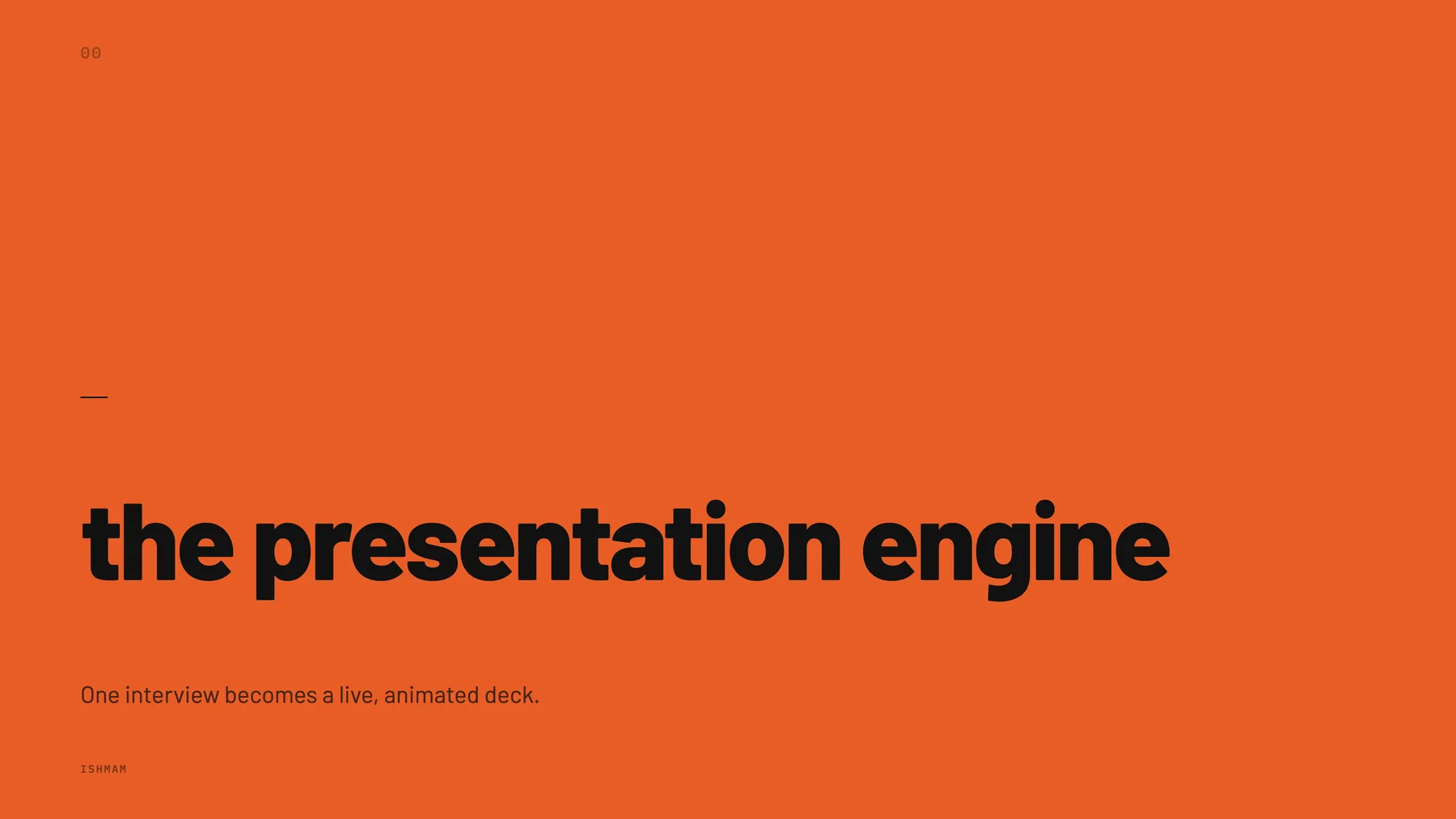
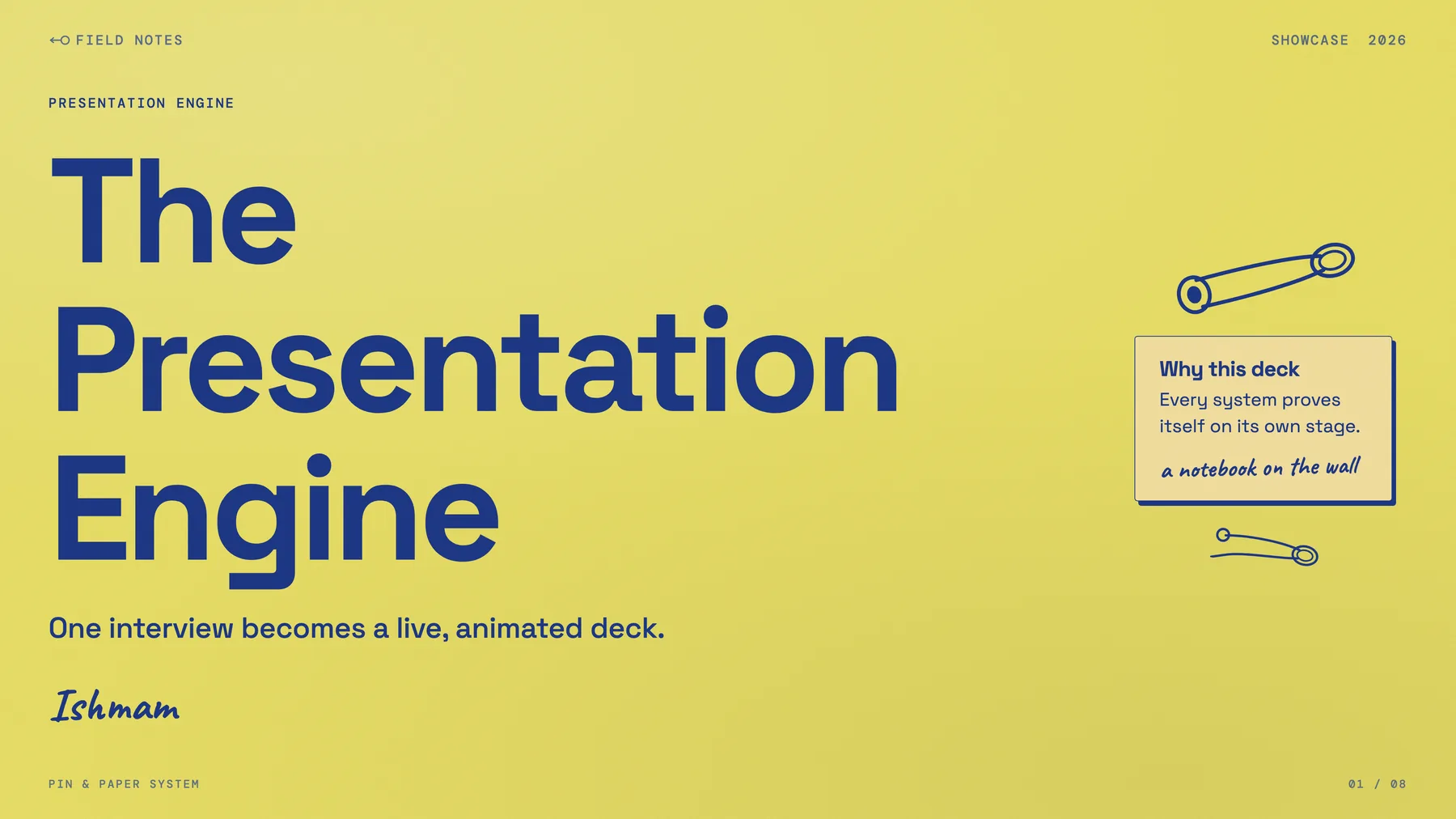
The Signal design system - deep-navy editorial title slideThe Neo-Grid-Bold design system - black and acid-green brutalist titleThe Retro-Windows design system - a Win-95 PRESENTATION.EXE windowThe Broadside design system - fire-orange poster titleThe Pin-and-Paper design system - field-notes with pinned cards

ONE DECK SPEC · FIVE DESIGN WORLDS · REAL RENDERS

A recorded interview goes in; a projector-ready deck with live QR audience polls comes out - built as versioned code, not slideware. 7 decks delivered to ~600 people across Shikho, LightCastle and NSU.

What changed: a talk is now an hour of conversation plus a build - and every deck since the incident carries a permanent poll QR.

7decks delivered
~600people in the audiences
34design systems built

SOURCE: His delivery record · Shikho internal, LightCastle, NSU

03 · UNDER THE HOODWHAT ACTUALLY HAPPENS

Pick a moment. This is what the system does with it - every step a deliberate call, none of it visible from the outside.

01
The author dumps raw material - typed, or dictated by voice. Nothing is structured yet. That is the point.
voice or text in
02
The AI interviews the author: four to six questions the dump did not answer, each shipped with tappable answer guesses mined from the dump itself - who is in the room, the one takeaway, how long. Answering is mostly tapping.
the interview pre-answers itself
03
Synthesis then forces every slide title to be a claim, not a label - "Four delivery startups raised big and still died", never "The Graveyard". A title that makes no argument does not ship.
action titles only
04
Visual rhythm is law: never two text-only slides in a row, a real exhibit every few slides, live polls drafted where the room should participate - and it recommends exactly three design systems for this talk, with reasons.
rhythm rules baked in
05
THE CLEVER BITthe interview knows what the deck can physically do - it asks poll-shaped questions because it knows the room will scan one QR and vote live. The planning layer and the delivery layer are one system.
tool-aware questions
04 · WHY NOT ONE PROMPTWHAT A ONE-SHOT WOULD HAVE GOT WRONG

One prompt gets you a deck. It does not get you a deck engine that survives contact with a live audience.

  1. The first architecture was wrong - and only real use proved it. A React template engine shipped, grew ten themes, and hit its ceiling: every theme had to pour into the same 19 fixed components. The teardown - the fork below - is the product.
  2. The polling layer is scar tissue. One permanent QR, two-second polling, glide-updating bars: each choice traces to a live failure in a real room, including a network tunnel that silently ate the fancy solution mid-talk.
  3. Quality is measured, not vibed. The design tokens were proven by regenerating real published decks and pixel-diffing every slide and every reveal step against the originals - then a geometry harness hunted dead space and overlaps at three screen sizes.
  4. It runs at zero marginal cost, deliberately. After a five-dollar bill for two runs, the whole pipeline moved off the metered API and onto the subscription. That is an economics decision a prompt cannot make.
05 · THE DIRECTIONWHERE THE HUMAN WAS
THE FORK · WHAT THE AI PITCHED VS WHAT I SENT

Late June. The engine is React with 19 fixed slide templates, and a tenth theme has just shipped as a "style kit". The decks all look... related. The model recommends deepening the kits - the templates themselves stay.

THE MODEL'S PITCH · AND ITS OWN POST-MORTEM, THE NEXT DAY

The architecture I'm going to use (my recommendation): a **theme becomes a "style kit"** [...] The theme can repaint and lightly reshape — **it can't change what the slide structurally *is*.** That ceiling is the architecture, not a tuning problem. The StyleKit was a valiant retrofit onto a fixed-template engine, and it can't reach the depth because **the templates dictate the grammar, the design system doesn't.**

WHAT I SENT BACK · TYPOS KEPT

It seems we might have built our current system in such a way that we are trying to retrofit and that isn't working - so if required, you can remove the entire current architecture and rethink the architecture so it can handle this. [...] Basically, I am giving you the freedom to not have any legacy code.

But I want a great product whos fundamental job is to create stunning wow slides - with animations, fades, reveals, all of that - something a powerpoint presentation would take months to do.

Thirteen hours later the React template engine was deleted. What replaced it is the 34-system library in the plate above - every deck authored fresh inside its design world, with only the hard-won polling core carried over. The five worlds up there are the same deck spec.

SESSION TRANSCRIPT · 2026-06-27 · BOTH SIDES QUOTED EXACTLY · [...] MARKS OMITTED SPEECH

The model optimizes inside the architecture it has. Direction is noticing the architecture is the problem - and granting permission to demolish.

46 slide patterns34+ append-only ADRsadversarial per-slide judgingzero marginal costHOW IT WAS RUN, NOT HOW IT WORKS